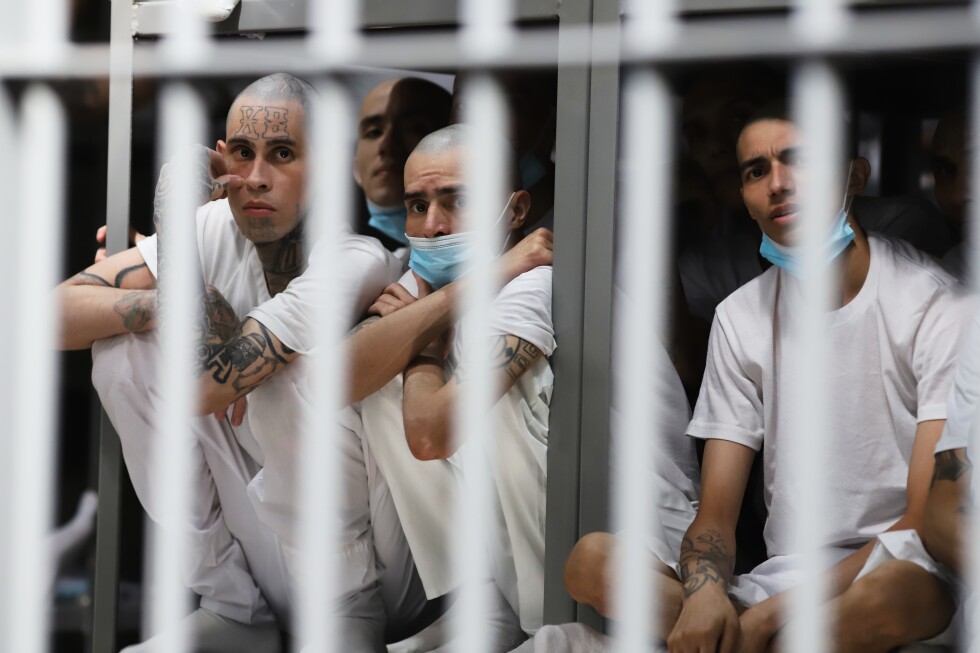
El Salvador's Mass Detentions: The Hidden Cost of Indefinite Holds
In El Salvador, a nation grappling with the legacy of gang violence, President Nayib Bukele's "war on gangs" has been met with widespread public approval. Yet, beneath the surface of apparent security improvements lies a profound humanitarian crisis: the mass detention of tens of thousands under a state of exception. These indefinite holds, often without judicial oversight or communication, are extracting a devastating hidden cost, leaving families in a perpetual state of anguish and raising serious questions about due process, human rights, and the potential for a de facto life imprisonment in El Salvador for countless individuals.
The stories are heartbreakingly common. Reynaldo Santos, a 57-year-old baker from Soyapango, clutches photos of his 22-year-old son, Jonathan, who was arrested during an anti-gang operation while playing a video game at home in December 2022. Two years later, Reynaldo's desperate plea remains unanswered: "I don't have enough certainty here that he could be alive." His only communication from authorities – vague notices of "gastritis" – offer little comfort, epitomizing the profound lack of transparency shrouding the fate of those detained.
The Erosion of Due Process: A Nation Under a State of Exception
Since March 2022, El Salvador has operated under a state of exception, a measure granting authorities broad powers to suspend constitutional rights in the name of national security. While lauded by many for significantly reducing gang-related crime in areas once controlled by groups like the Mara Salvatrucha, this policy has come at a steep price for civil liberties. According to the Humanitarian Legal Relief NGO, approximately 30,000 innocent individuals are believed to be among the 83,000 people detained without judicial order and accused of gang affiliation or complicity.
Under this exceptional regime, fundamental protections have evaporated. Prison visits are strictly prohibited, detainees are kept incommunicado, and families often have no idea where their loved ones are being held, let alone their condition. Reynaldo Santos's monthly trips to La Esperanza prison with food and clothing are acts of blind hope, with no guarantee his offerings ever reach Jonathan. This systemic lack of communication transforms an arrest into a disappearance, leaving a void of information that fuels unbearable anxiety.
The state of exception effectively creates a parallel legal reality where the presumption of innocence is sidelined, and the right to a fair trial becomes a distant dream. Without access to legal counsel, independent medical examinations, or contact with the outside world, detainees are vulnerable to abuses, and their cases remain mired in ambiguity. For families, the uncertainty of an indefinite hold without even the most basic information about their loved one's well-being is a cruel form of psychological torment, a legal limbo that feels terrifyingly close to a de facto life imprisonment in El Salvador.
The Anguish of Uncertainty: Families Demand "Proof of Life"
The collective anguish of hundreds, if not thousands, of families reverberates throughout El Salvador. Reports from Amnesty International, Humanitarian Legal Relief, and the Victims of the State of Exception Movement consistently highlight the dire human rights situation within the detention system. These organizations document cases of arbitrary arrests, lack of due process, and inhumane prison conditions.
Pablo Rivera, a 54-year-old farmer, echoes Reynaldo's desperation, tirelessly seeking information about his son, Eduardo, a former soldier in his thirties. "What I want to know is if my son is alive or dead," he pleads. This fundamental human need for certainty underscores the severity of the crisis. In response to these widespread cries, several NGOs launched the "Proof of Life" campaign in October, demanding medical examination certificates for detainees and the restoration of visitation rights.
The campaign highlights a critical gap in the Salvadoran justice system under the state of exception: the complete breakdown of accountability and transparency. Without proof of life, families are left to imagine the worst, unable to mourn, unable to fight for justice, and unable to move forward. This profound lack of basic human connection and verification turns the legal process into an inhumane ordeal, where the simple act of confirming a loved one's existence becomes an almost impossible demand.
International Scrutiny and the Shadow of Dangerous Prisons
El Salvador's prison system has long been notorious for overcrowding, violence, and human rights violations, concerns that predate the current state of exception but have been significantly exacerbated by it. International bodies and human rights advocates have consistently flagged these issues. Disturbingly, even the United States, through its immigration policies, has inadvertently become entangled in this complex web of concerns.
Reports indicate that the Trump administration, in its aggressive stance on immigration, sent alleged gang members to Salvadoran prisons, facilities described by civil rights groups as "among the worst in the world." Expert testimony, such as that from Sarah C. Bishop of Baruch College, warns that deportees imprisoned in El Salvador are "highly likely to face immediate and intentional life-threatening harm at the hands of state actors and a secondary threat of violence from incarcerated gang members." The director of prisons himself was indicted by the U.S. for corruption and alleged negotiations with MS-13, painting a grim picture of the institutional integrity within the system. The U.S. government's continued use of this system, even under a centuries-old national security law, highlights a troubling blind spot in international human rights considerations. For more on this complex issue, see US Immigration Policy and El Salvador's Dangerous Prisons.
Cases like Andry, a gay make-up artist reportedly sent to El Salvador due to two tattoos (reading "Mom" and "Dad" with crowns), underscore the arbitrary nature of some detentions and the severe risks involved. This international dimension adds another layer of urgency to the call for transparency and human rights protections. The conditions within these facilities, combined with the indefinite nature of the detentions, magnify fears that many individuals caught in this dragnet face a silent and unacknowledged life imprisonment in El Salvador, far from any judicial review or public accountability.
Navigating the Legal and Humanitarian Maze: What Can Be Done?
Addressing the profound human cost of El Salvador's mass detentions requires a multi-faceted approach. While the domestic political landscape heavily favors President Bukele's hardline approach, international pressure and sustained advocacy are crucial. Here are some key considerations:
- Advocacy and Documentation: NGOs play a vital role in documenting individual cases, gathering evidence of arbitrary arrests and human rights violations, and amplifying the voices of affected families. Continuous reporting from organizations like Amnesty International and Humanitarian Legal Relief is essential to keep the issue on the international agenda.
- International Pressure: Governments and international bodies must continue to press El Salvador for transparency, judicial reform, and adherence to international human rights standards. This includes demanding access for independent monitors to detention facilities and supporting legal aid efforts for detainees.
- Support for Families: Providing legal and psychological support to families of detainees is paramount. Organizations offering guidance on navigating the confusing legal landscape, emotional support, and assistance in basic needs can make a significant difference in their struggle for answers.
- Promoting Due Process: The long-term solution lies in reinstating and strengthening due process rights. This means ensuring that all arrests are based on credible evidence, detainees have access to legal representation, and trials are fair and timely. The state of exception, while perhaps effective in addressing immediate security threats, cannot be a permanent substitute for a functioning justice system.
Families, in their desperation, often undertake immense personal and financial sacrifices, sometimes selling off assets to pay for legal fees or basic supplies for their detained relatives, only to face a wall of silence. The creation of clear, accessible channels for families to obtain information about their loved ones, including regular visitation rights and reliable medical updates, is not merely a bureaucratic reform; it is a fundamental human right.
Conclusion
El Salvador's aggressive strategy against gangs has undeniably transformed the security landscape, but the hidden cost of its mass detentions is immense. The stories of Jonathan Santos and Eduardo, lost in a system without due process, represent thousands of individuals and families trapped in an agonizing cycle of uncertainty. The indefinite nature of these detentions, coupled with severe human rights concerns in the prison system, casts a long shadow, raising the terrifying prospect of a de facto life imprisonment in El Salvador for countless innocent people without ever facing a judge. As the global community continues to observe El Salvador's security measures, the urgent plea for transparency, accountability, and the restoration of fundamental human rights for all its citizens must not be overlooked.